At DMEMS 2026 in Del Mar, Cornel Manole showed how OCMEE delivered 10 functional auxiliary light sets, 20 lamps, in 30 days for a vehicle reveal.
From CAD to Client at DMEMS 2026: 20 Functional Lamps in 30 Days
April 22, 2026 | Del Mar, California, USA
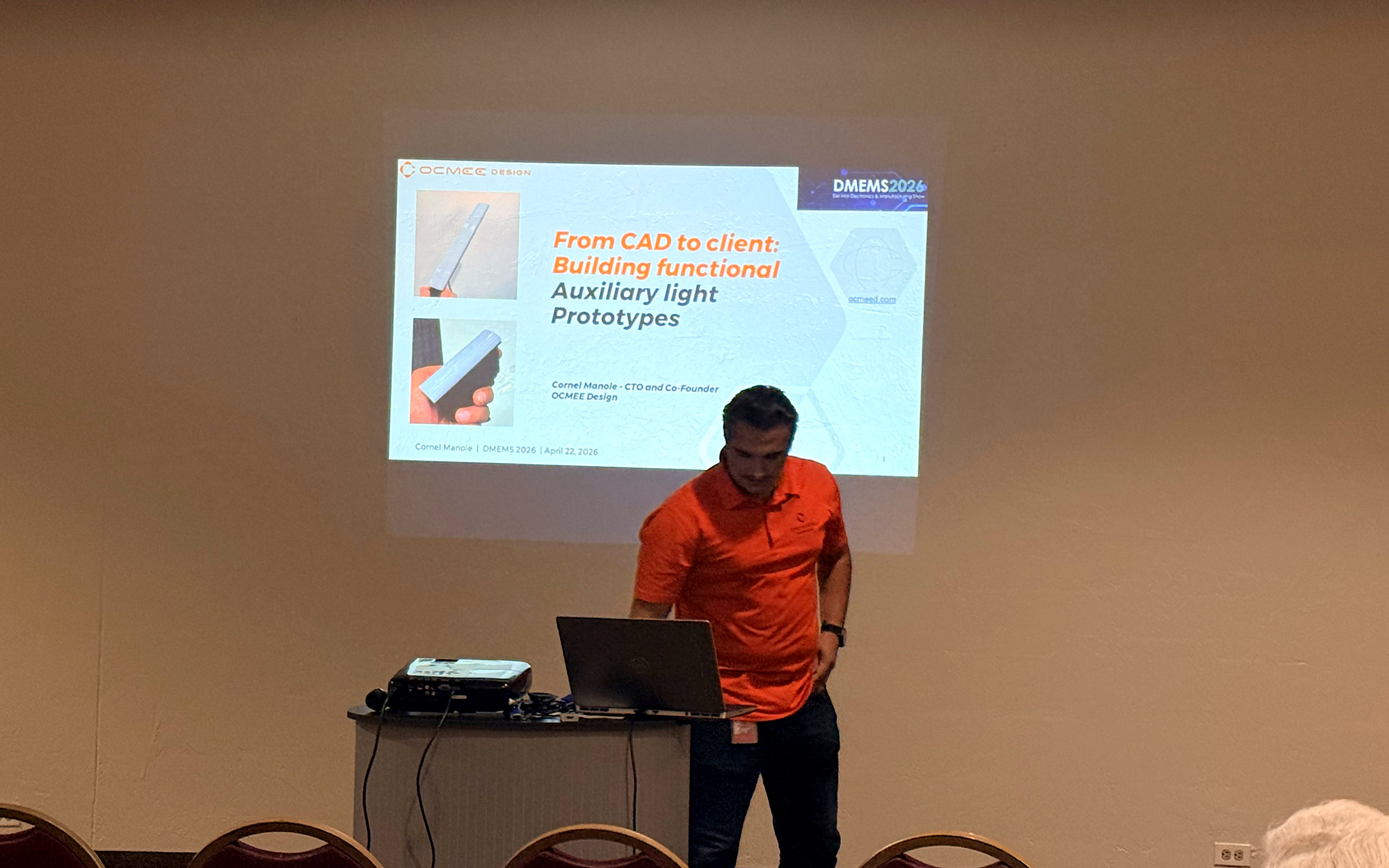
At the Del Mar Electronics & Manufacturing Show (DMEMS) 2026, Cornel Manole, CTO and Co-Founder of OCMEE Design, presented From CAD to Client: Building Functional Auxiliary Light Prototypes for an Automotive OEM in Room C, Mission Towers, at the Del Mar Fairgrounds.
The call
The talk started with a real request: could we build 10 sets of functional auxiliary lights in 30 days for a vehicle reveal? Other suppliers had declined functional work, and the only quote that came back was $28,000 for non-functional dummy shells. The reveal date could not move. We said yes.
How we built it
Week one was feasibility: lamp geometry, LED configuration, housing printability, circuit requirements, sourcing and assembly time. Week two turned that into a firm commitment. The final two weeks were production.
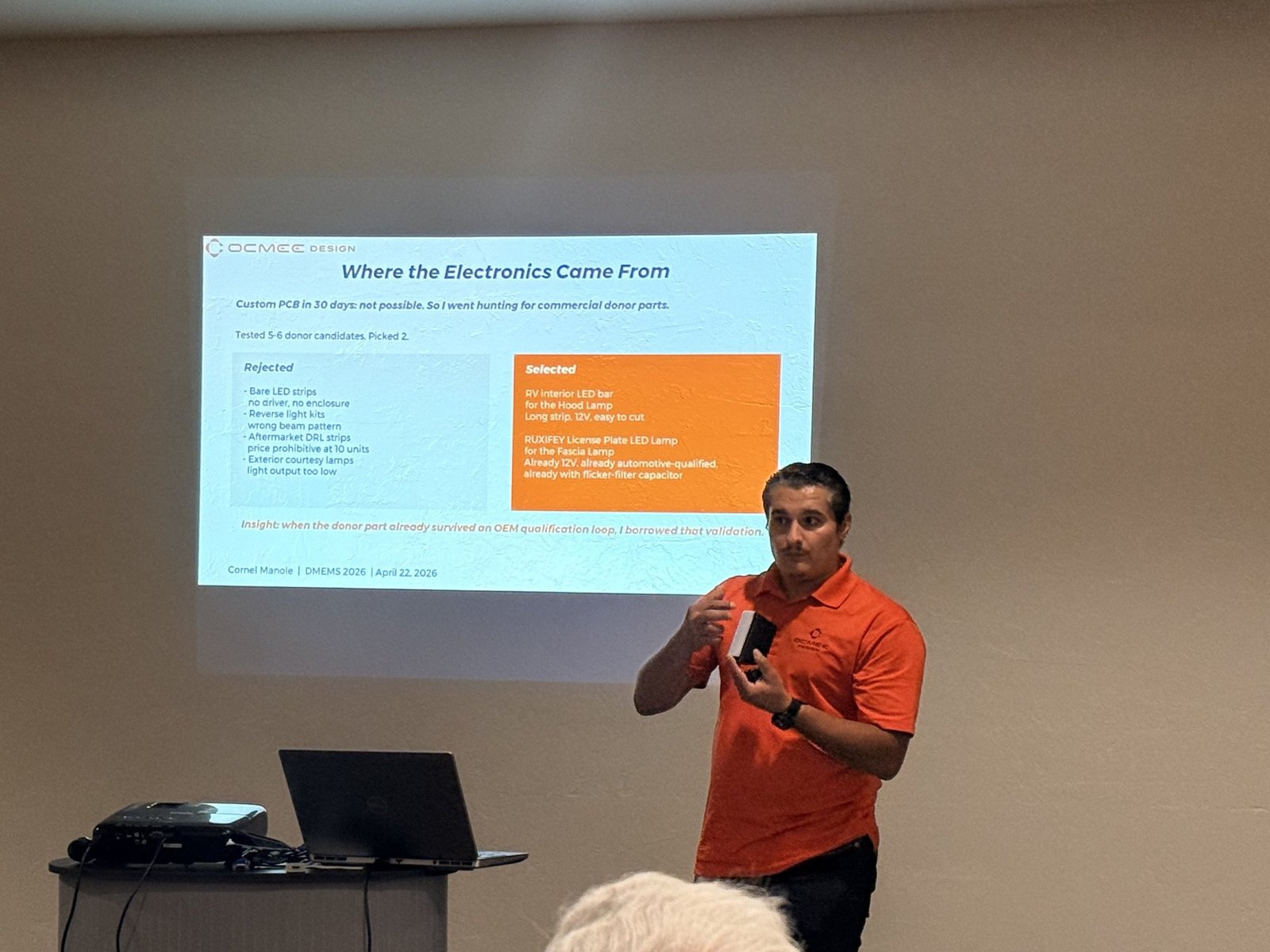
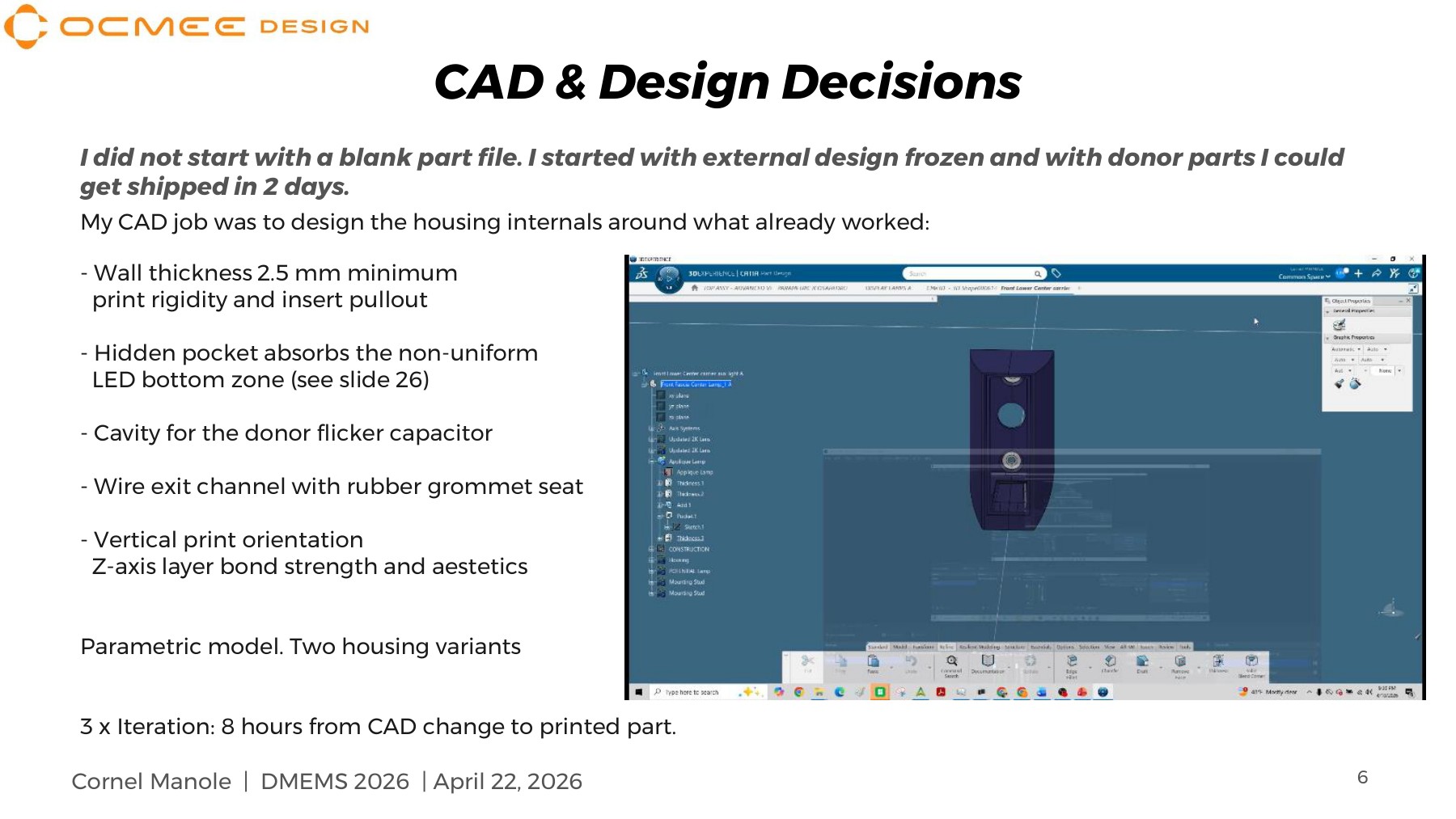
A custom PCB was not possible in 30 days, so we did not start from a blank part file. We tested five to six commercial donor parts, picked two, and designed the housings around electronics that already worked:
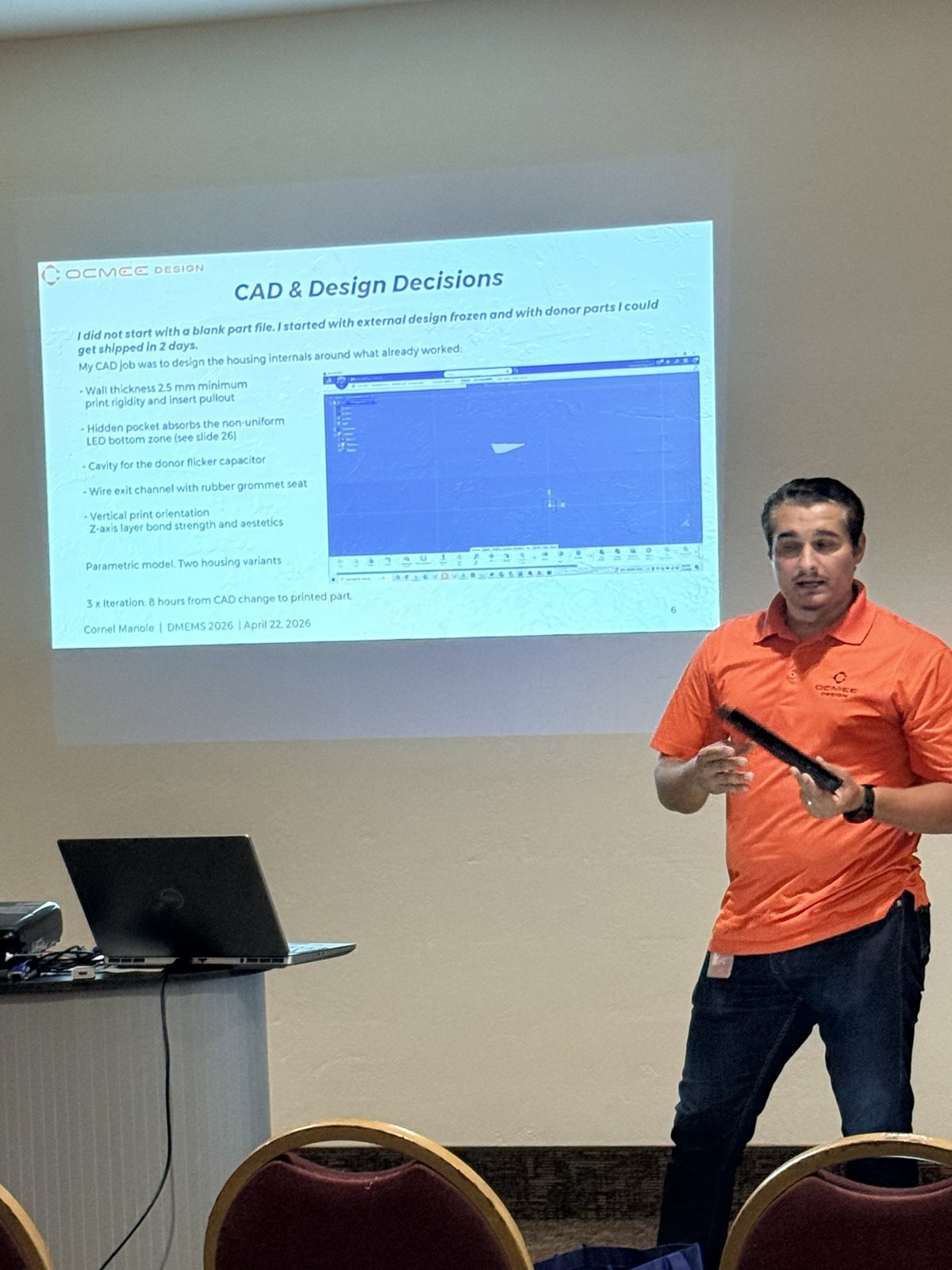
- FDM-printed PC-ABS housings at 0.2 mm layers, with 2.5 mm minimum walls for rigidity and insert pull-out strength
- M4 heat-set brass inserts pressed at 200 °C
- Lenses bonded with 3M DP100 Clear epoxy and clamped for 24 hours
- The donor board’s smoothing capacitor reused to stop visible flicker on vehicle 12 V
What went wrong, and what fixed it
The donor LED strip had a dark band where the PCB carries electronics instead of LEDs, and it showed through the lens. Diffusers washed out the lit zone. The fix was in the CAD: a hidden pocket in the housing that tucks the dead zone out of sight. Mid-program the client also asked for a pulsing mode, so we added a small cavity for an off-the-shelf strobe controller and bench-tested every mode before delivery.
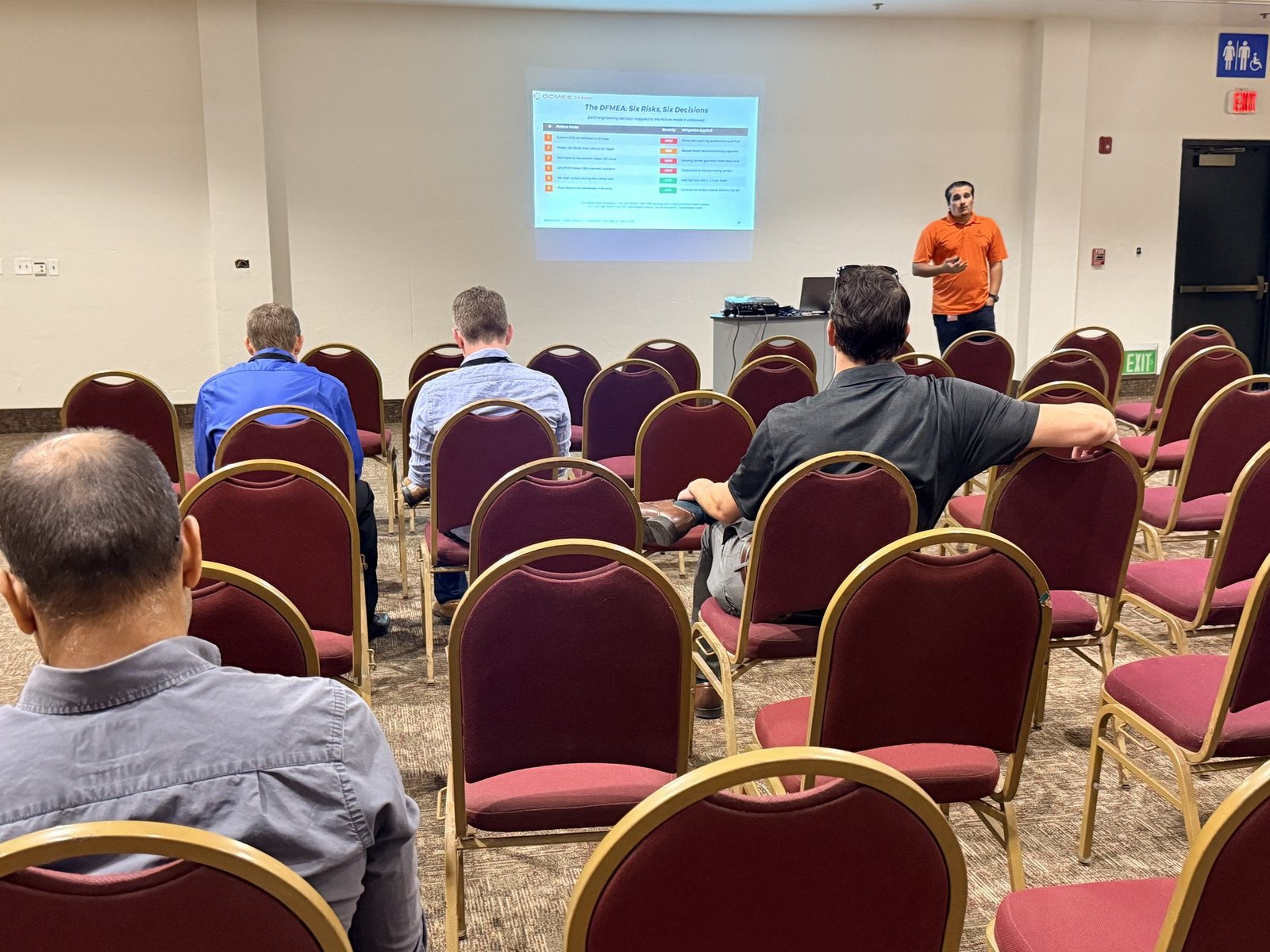
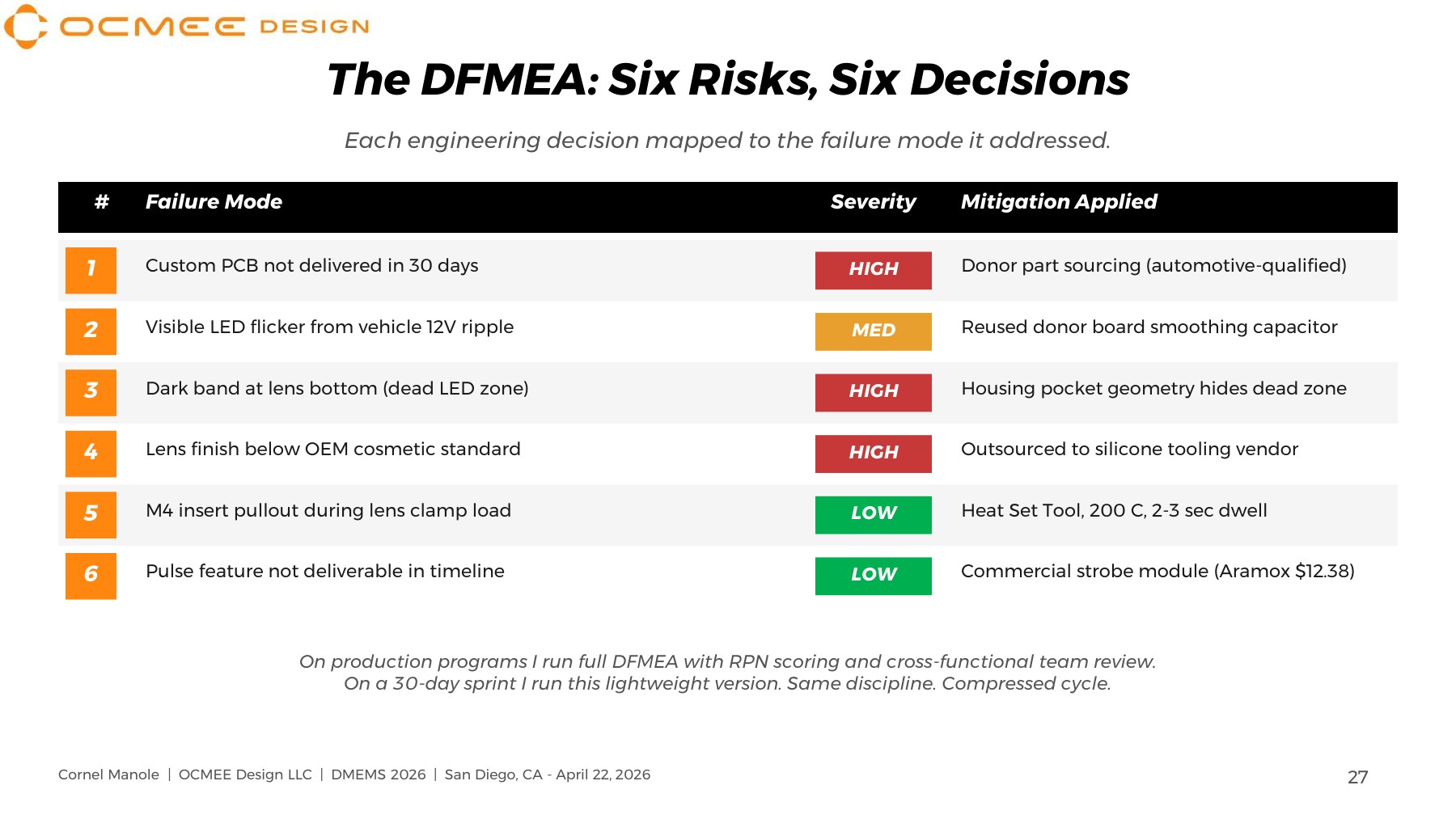
Each engineering decision was mapped to the failure mode it addressed in a six-risk DFMEA, which the audience spent the most time on.
The result
10 functional sets delivered. 20 lamps. 30 days. On time.
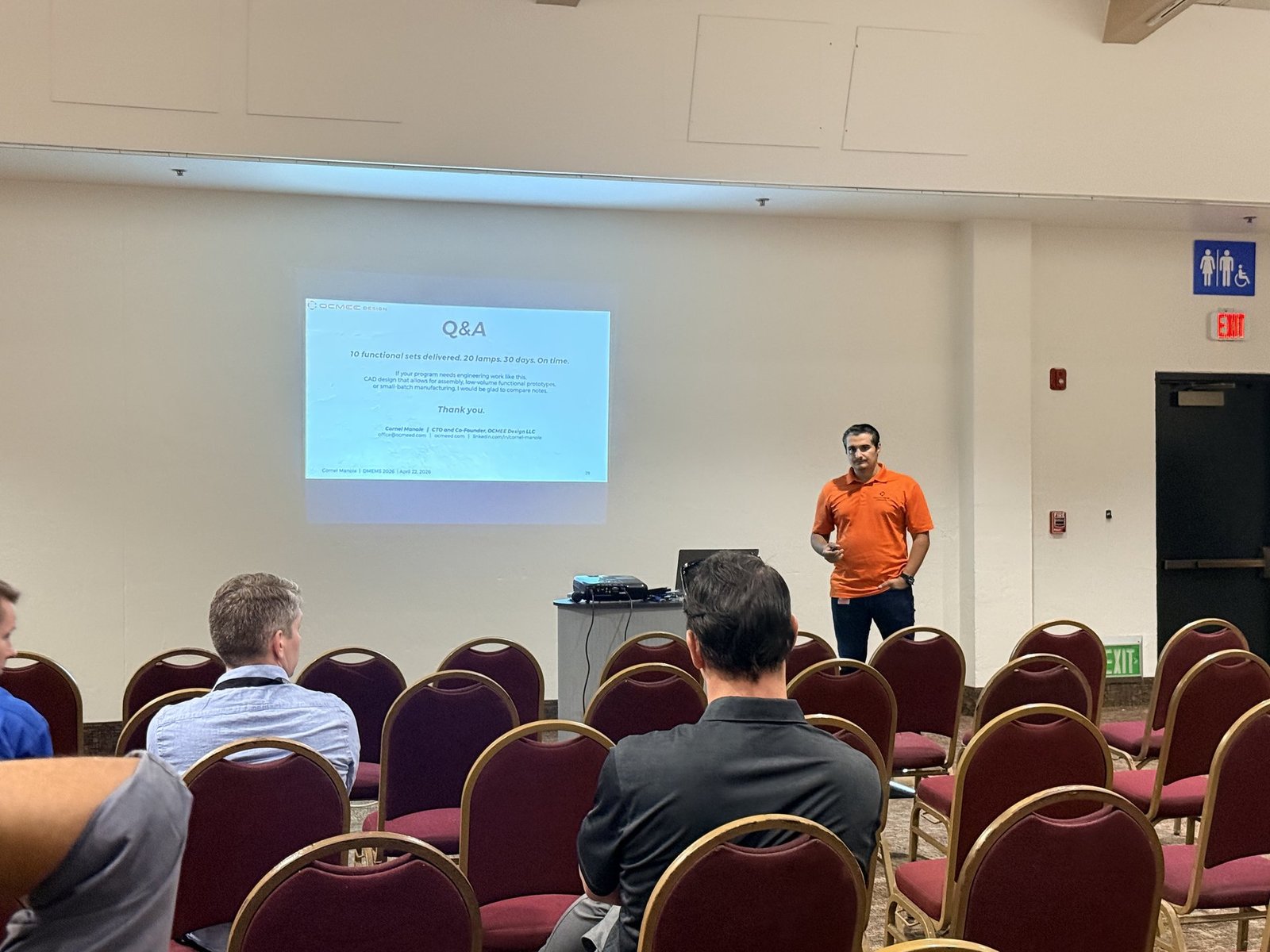
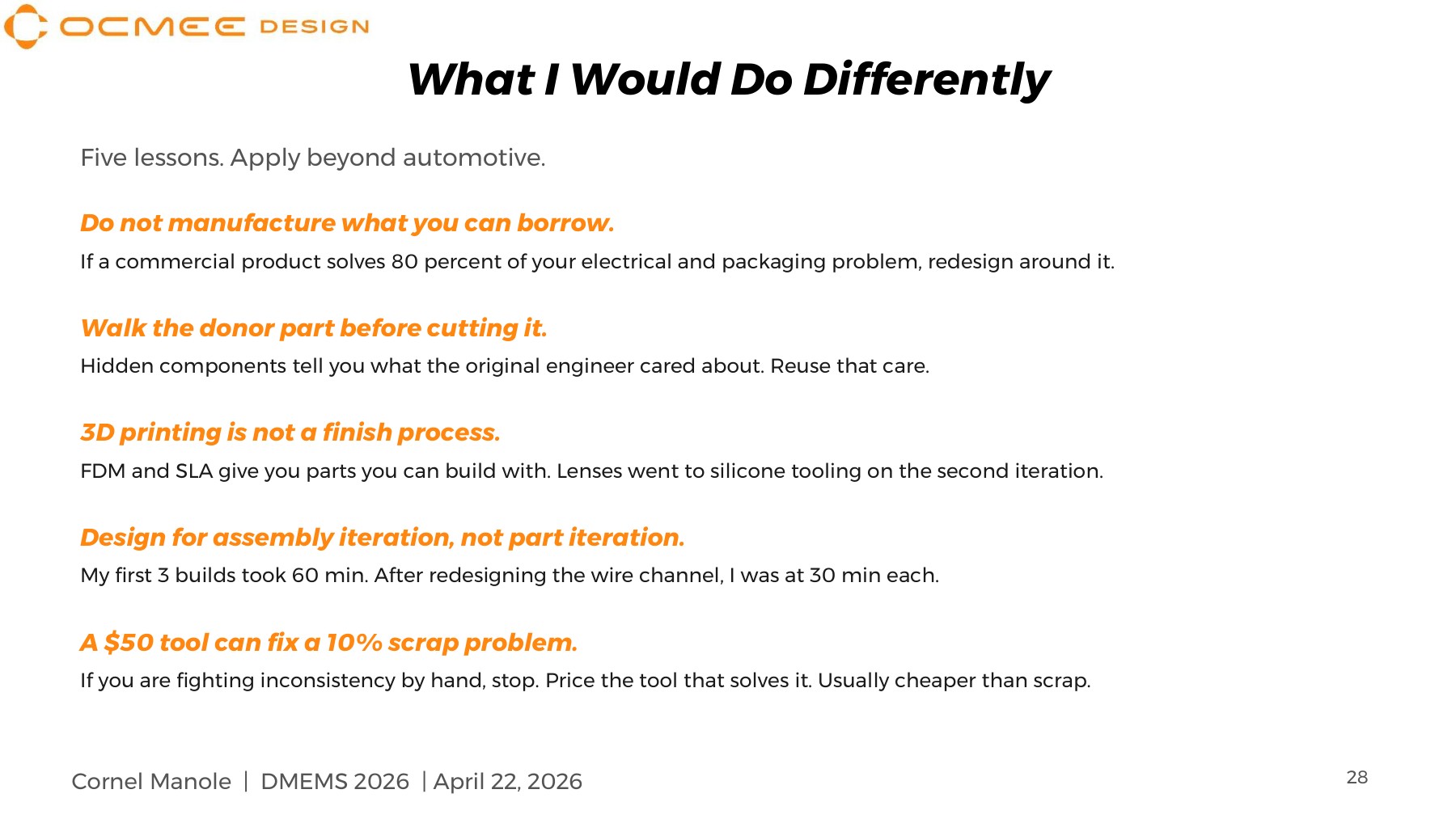
The lesson Cornel closed with applies well beyond lighting: do not manufacture what you can borrow. If a commercial product solves most of the electrical and packaging problem, redesign around it and spend your engineering on the parts that are actually new.
If your program needs CAD designed for assembly, low-volume functional prototypes or small-batch builds, talk to us →