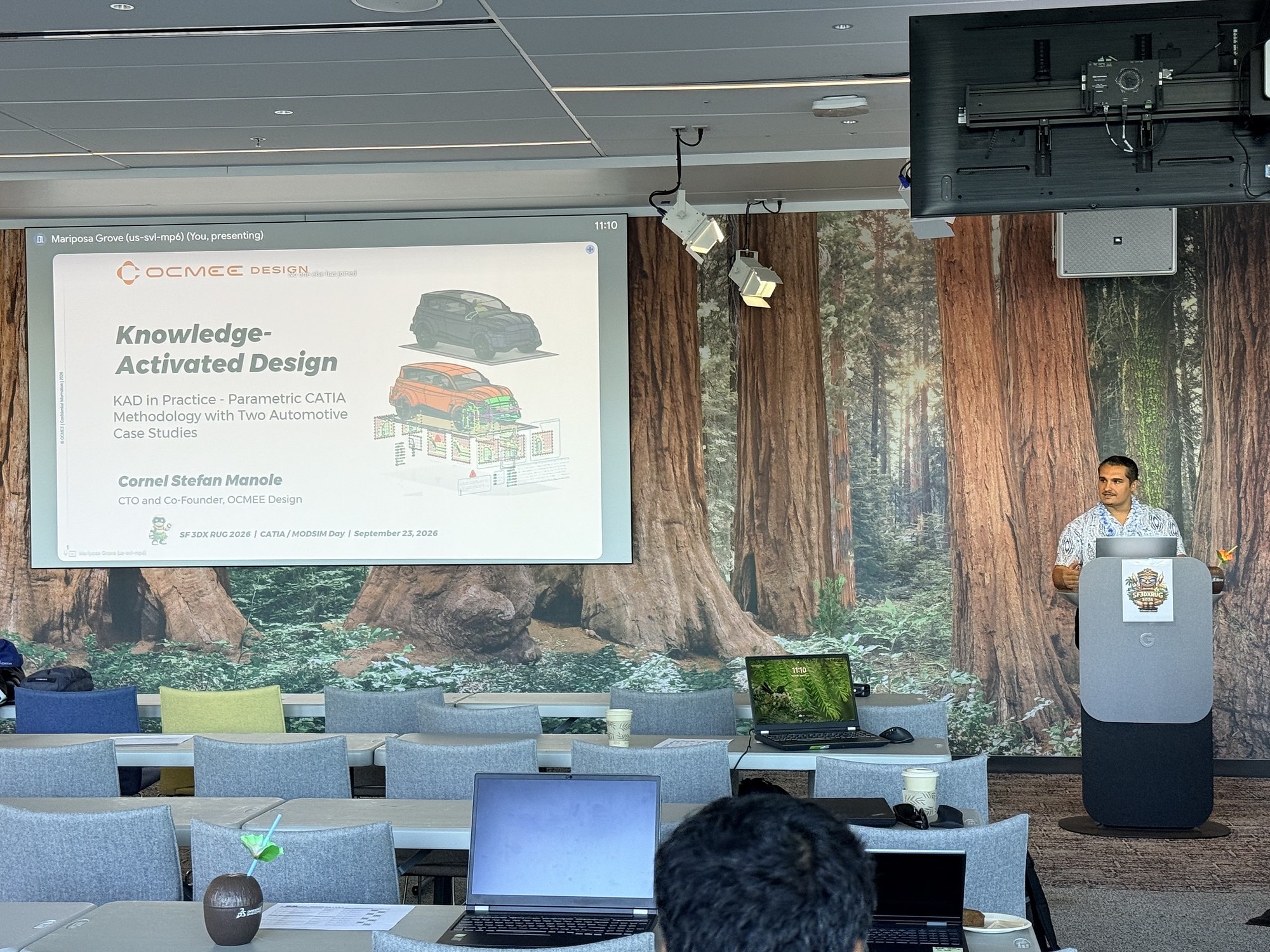
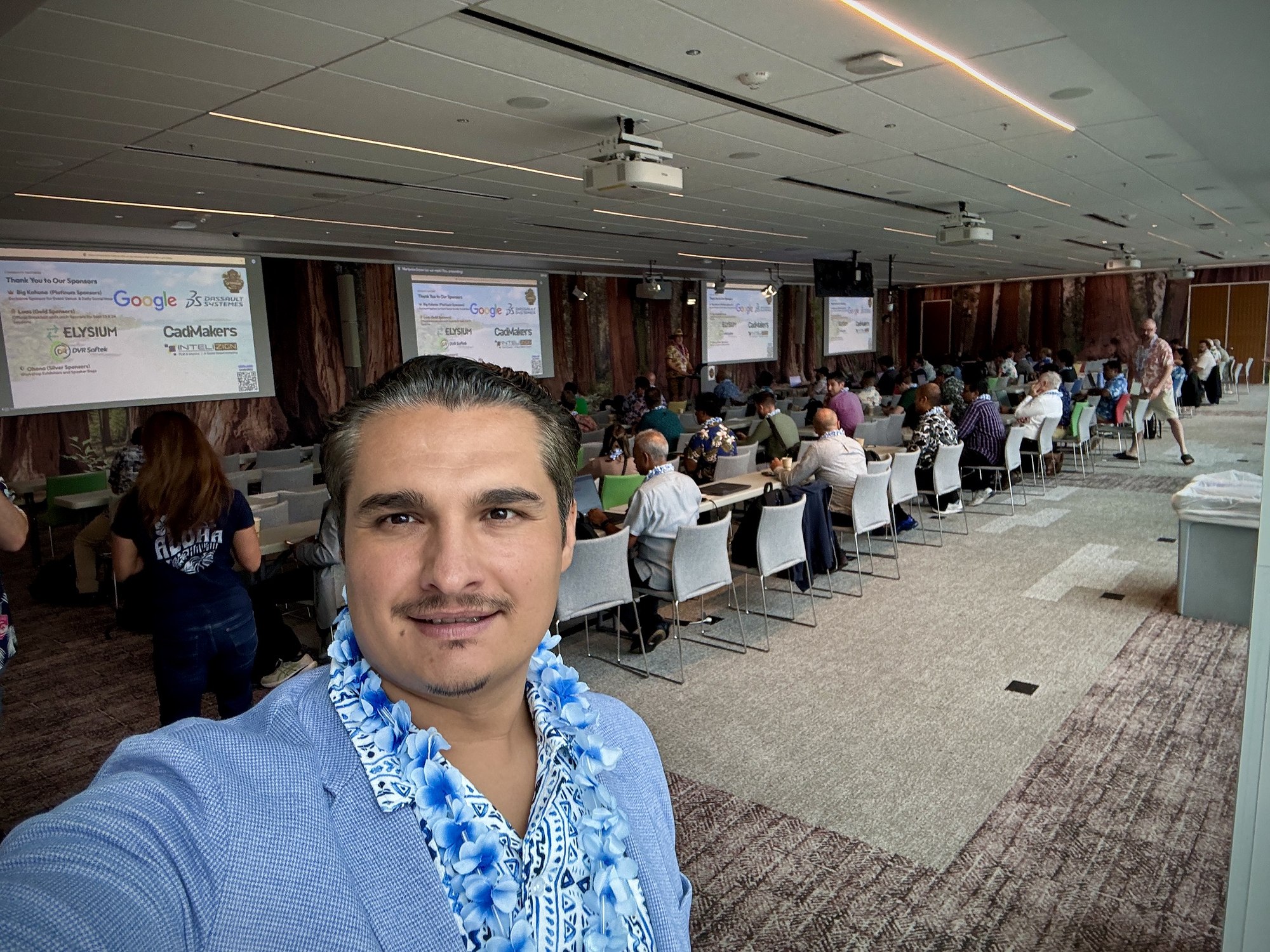
At the Google Cloud Campus in Sunnyvale, Cornel Manole presented Knowledge-Activated Design with two automotive case studies at the SF Bay Area 3DEXPERIENCE Regional User Group, September 23, 2026.
Knowledge-Activated Design at Google Cloud, Sunnyvale: SF Bay Area 3DEXPERIENCE User Group 2026
September 23, 2026 | Google Cloud Campus, Sunnyvale, California, USA
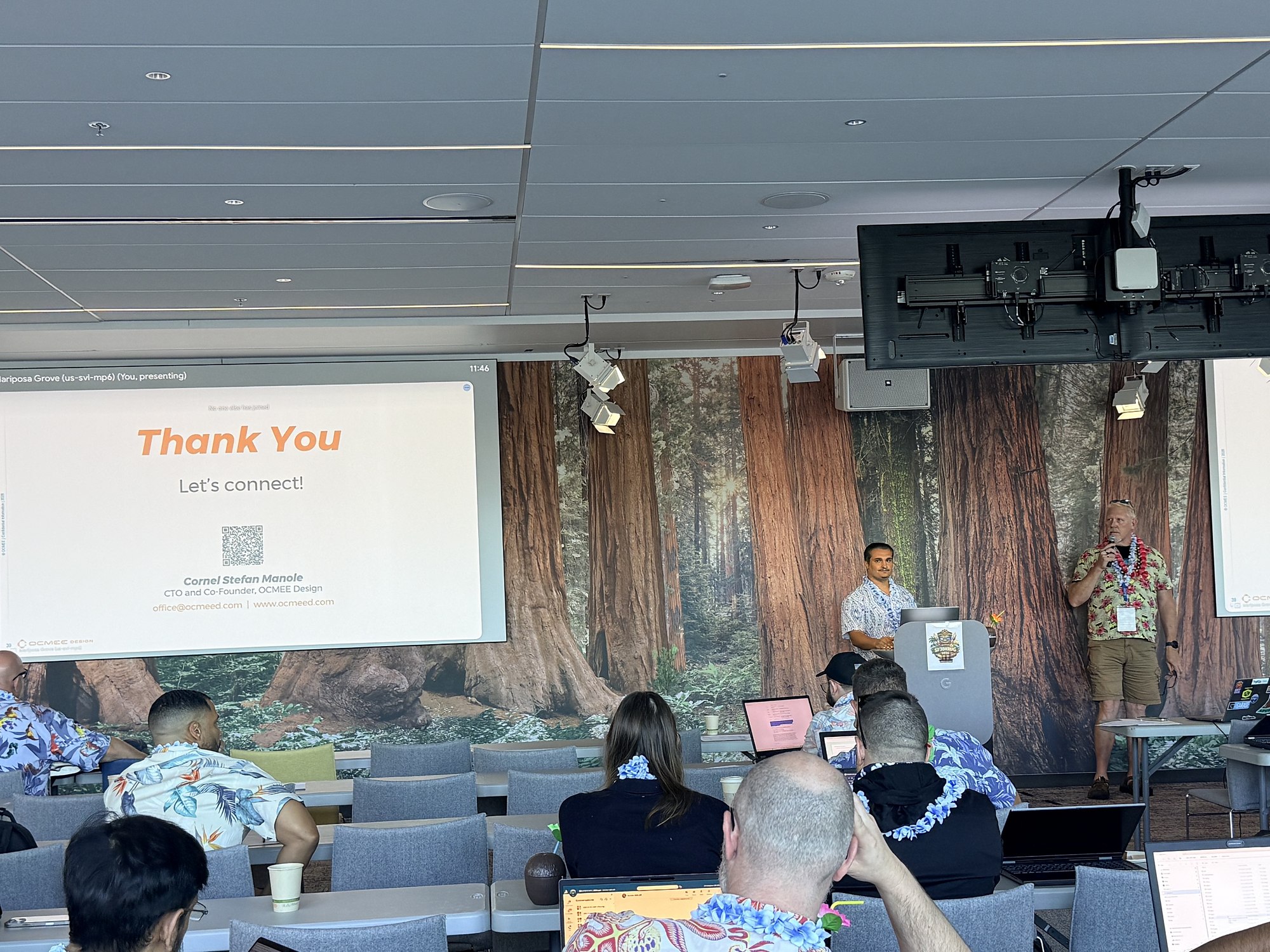
On CATIA / MODSIM Day of the SF Bay Area 3DEXPERIENCE Regional User Group, held at the Google Cloud Campus in Sunnyvale, Cornel Manole, CTO and Co-Founder of OCMEE Design, presented Session 2: Knowledge-Activated Design, KAD in Practice: Parametric CATIA Methodology with Two Automotive Case Studies. The session followed Dassault Systèmes’ opening keynote, What’s New in CATIA & MODSIM.
VENUE
Google Cloud Campus, Sunnyvale
VENUE HOST
Google Cloud
EVENT
2 days + workshops, 160+ registrants
OCMEE SESSION
Session 2, CATIA / MODSIM Day

The question behind the talk
Open any released CAD model. It holds the shape of the part with precision. It does not hold the reasons the shape is acceptable. Those reasons are real engineering constraints, and they usually live outside the model: in a checklist, a design guide, a supplier document or someone’s memory. The model will regenerate a part that breaks every one of them and report nothing.
Knowledge-Activated Design moves those rules into the CAD model as named, executable objects that evaluate on every update. The model reports the consequence of a change at the moment the change is made.
The method
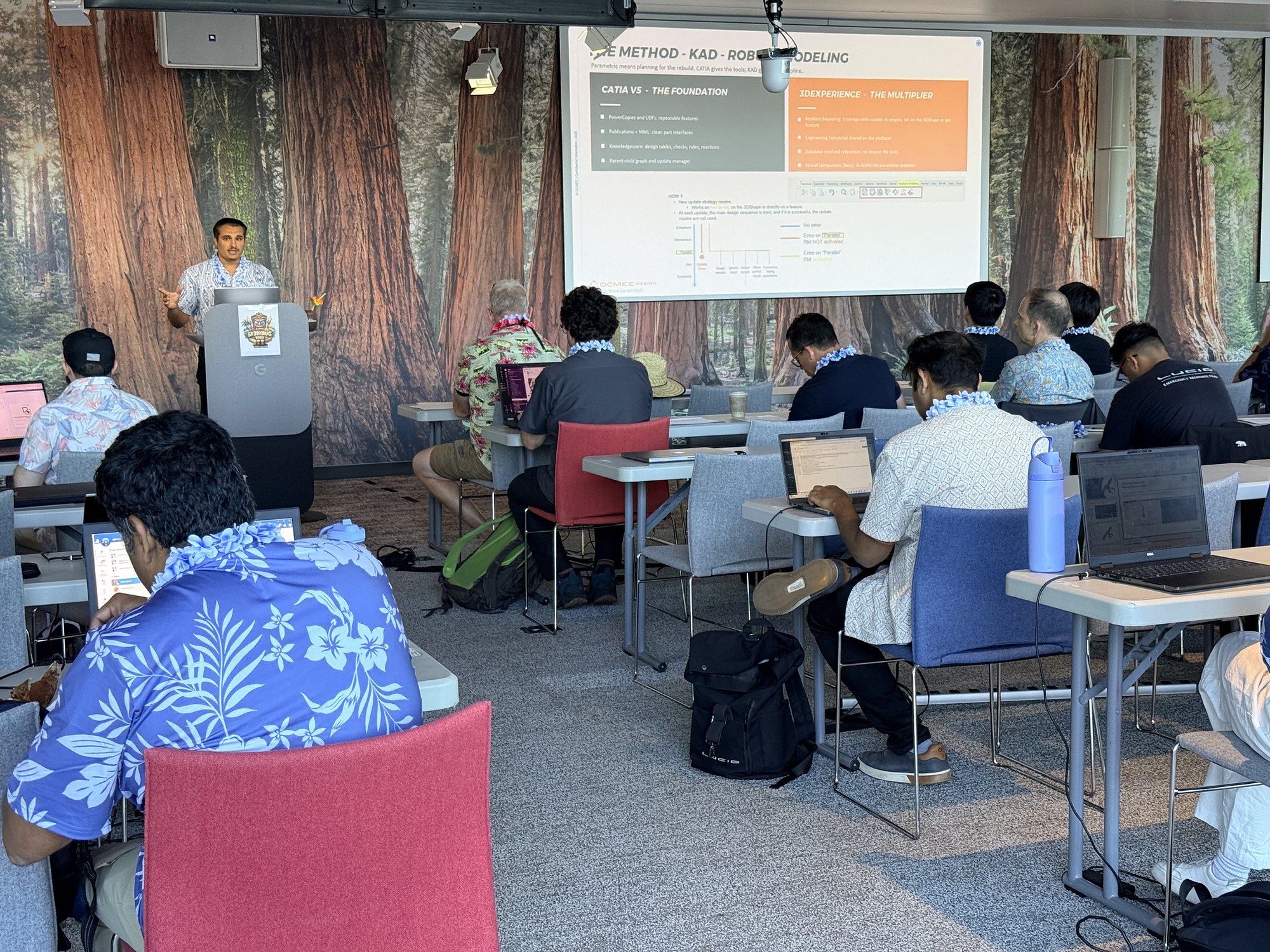
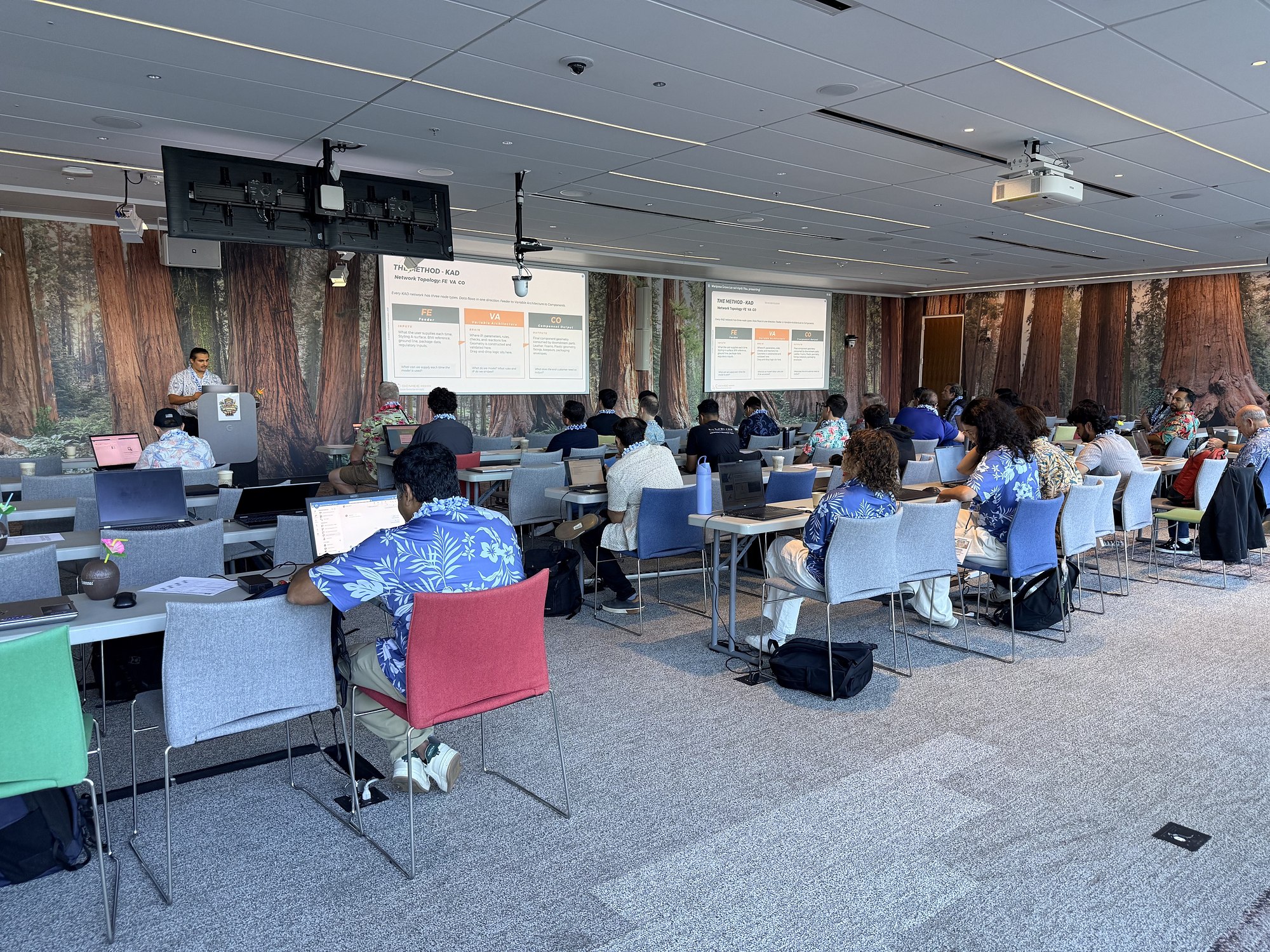
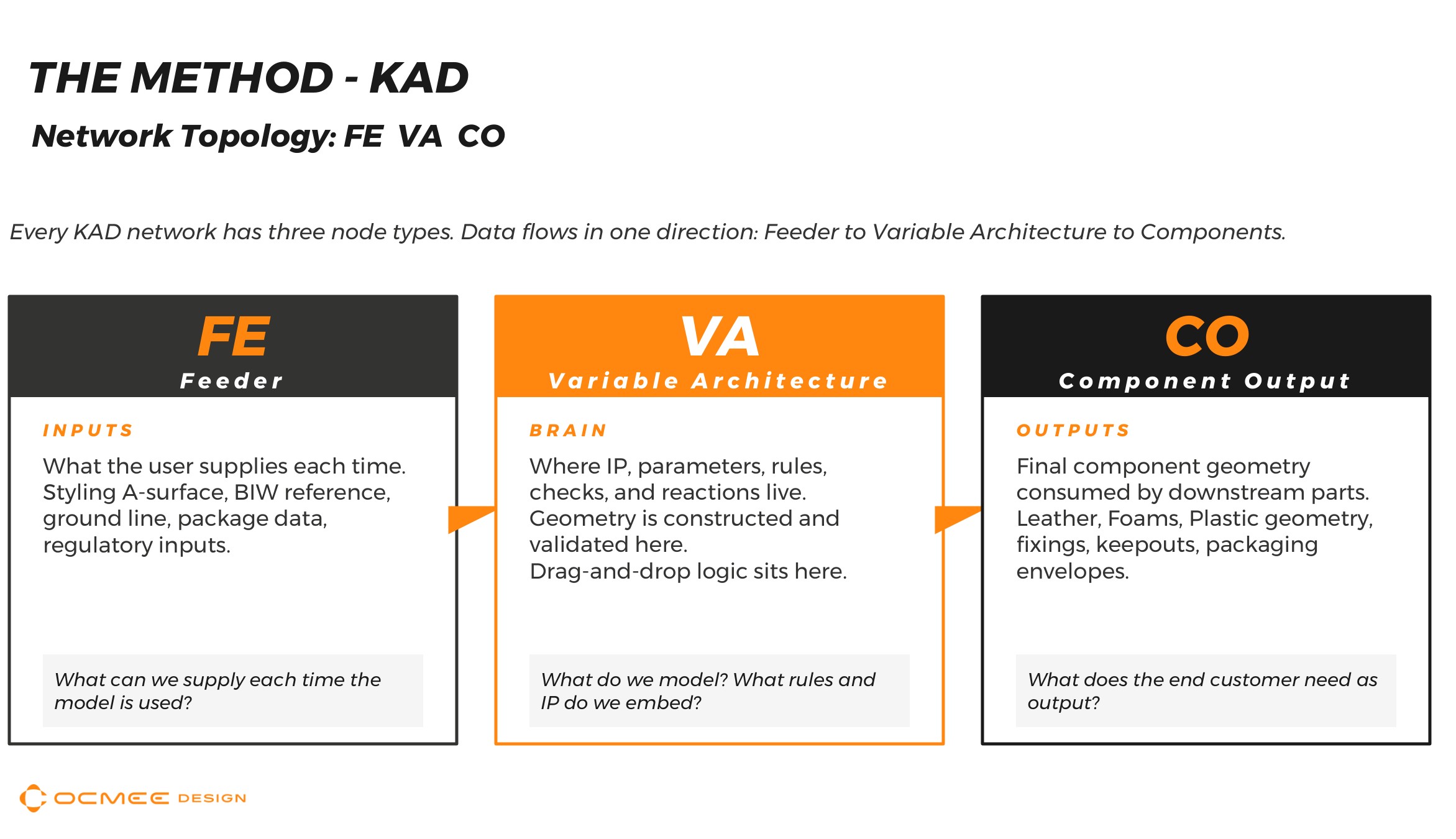
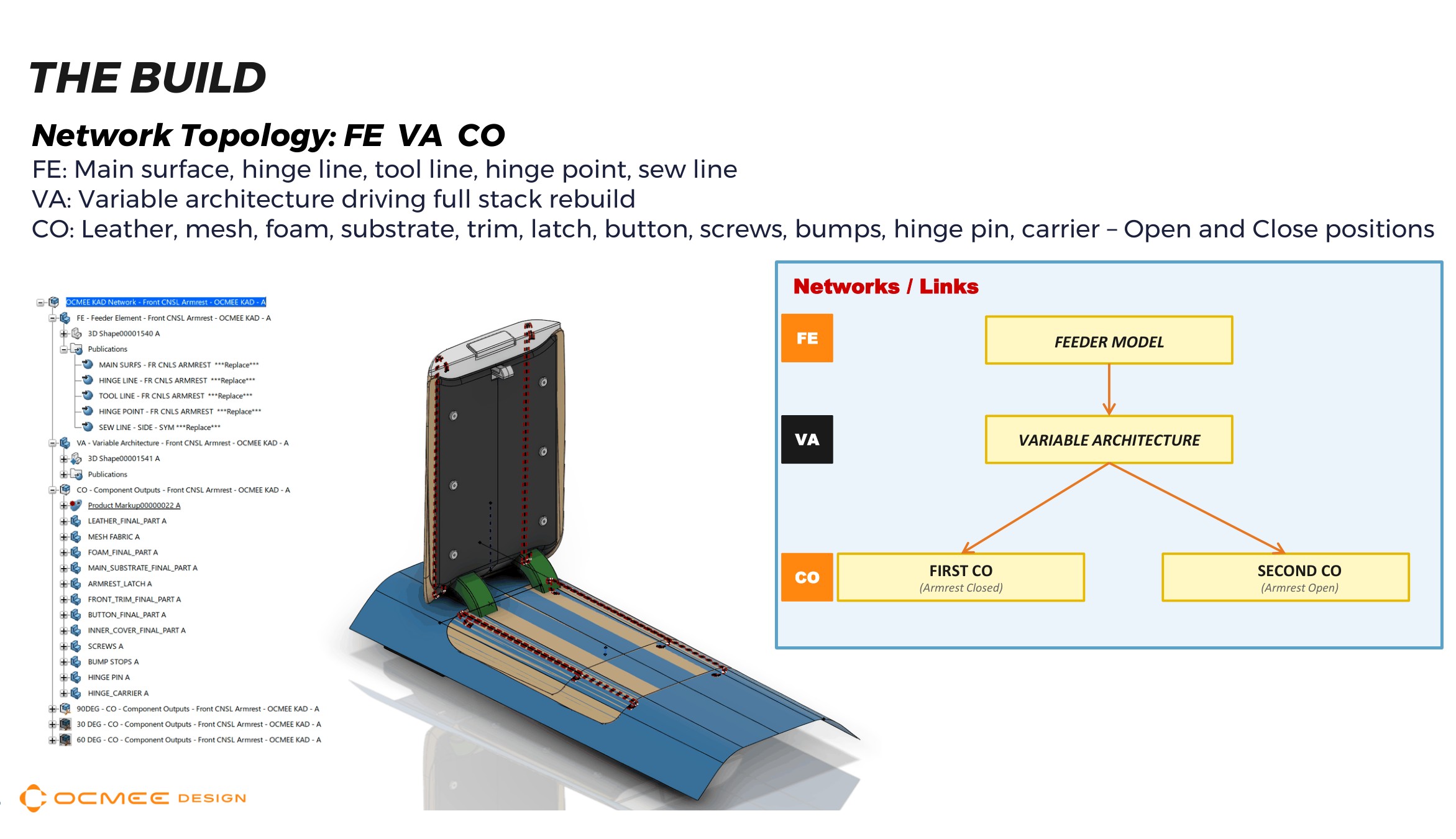
Every KAD network has three node types, and data flows in one direction: the Feeder holds the inputs, the Variable Architecture holds the rules and builds the geometry, and the Component Outputs are the released parts.
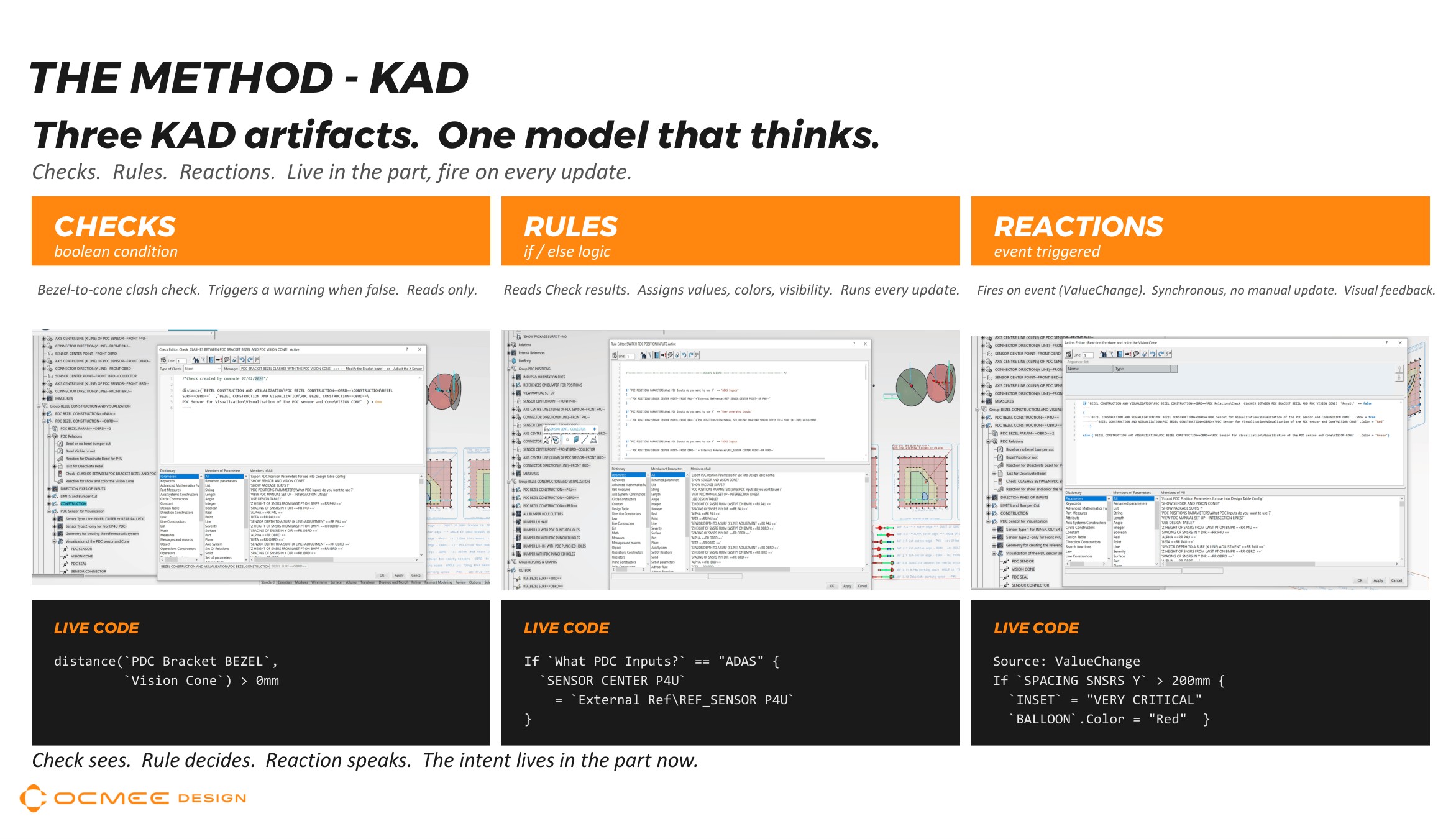
Inside the model, three standard CATIA objects do the work. Checks test the geometry, rules decide what to change, and reactions give instant visual feedback. Check sees. Rule decides. Reaction speaks.
Two case studies, two different reasons to fail
Center console armrest. A comfort-critical interior part: leather over mesh lamination over foam over a moulded substrate, on a hinge, with a lid. When the styling surface changes, the whole stack regenerates, and clearance checks against small, medium and large cups at 30, 60 and 90 degrees of lid opening turn red the moment access is lost.
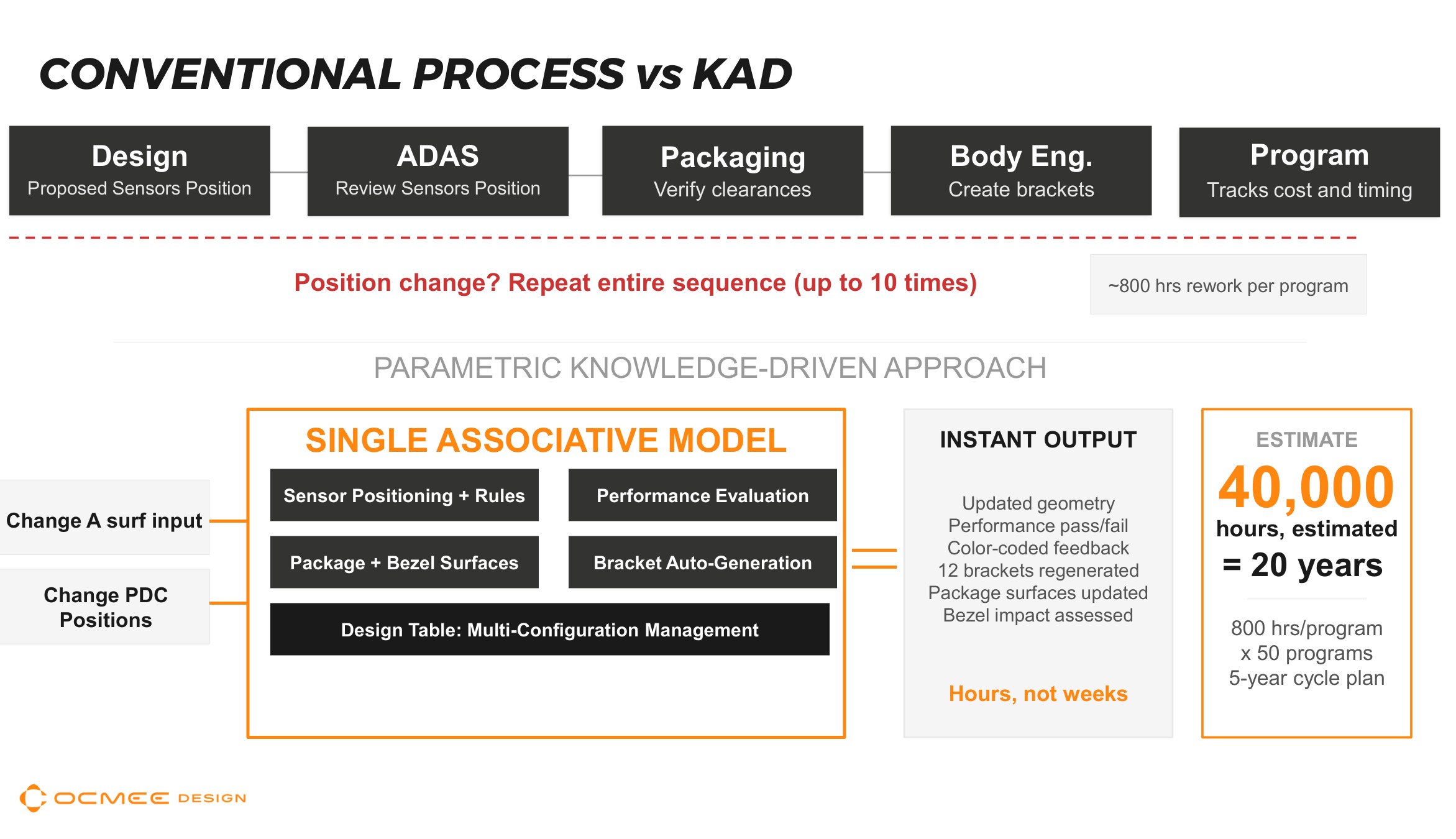
Park distance control. A safety-critical exterior system: sensor positions, brackets and package clearance in the bumper. One associative model replaces the sequential loop between Design, ADAS, Packaging and Body Engineering.
Everything shown runs on the 3DEXPERIENCE platform with licences engineering teams already own. What is not standard is the discipline: declared inputs, logic in the middle, released outputs, and nothing writing backwards.
What’s next
The method behind this session is published in IEEE Access (2026). Cornel presents KAD next as a special guest at the CATIA SoCal Regional User Group in Long Beach on November 10, 2026.