
2026: Why the U.S. Leads Software-Defined Vehicle Architecture
2026: Why the U.S. Leads Software-Defined Vehicle Architecture
Ocmee Design Engineering Insights – January 3, 2026
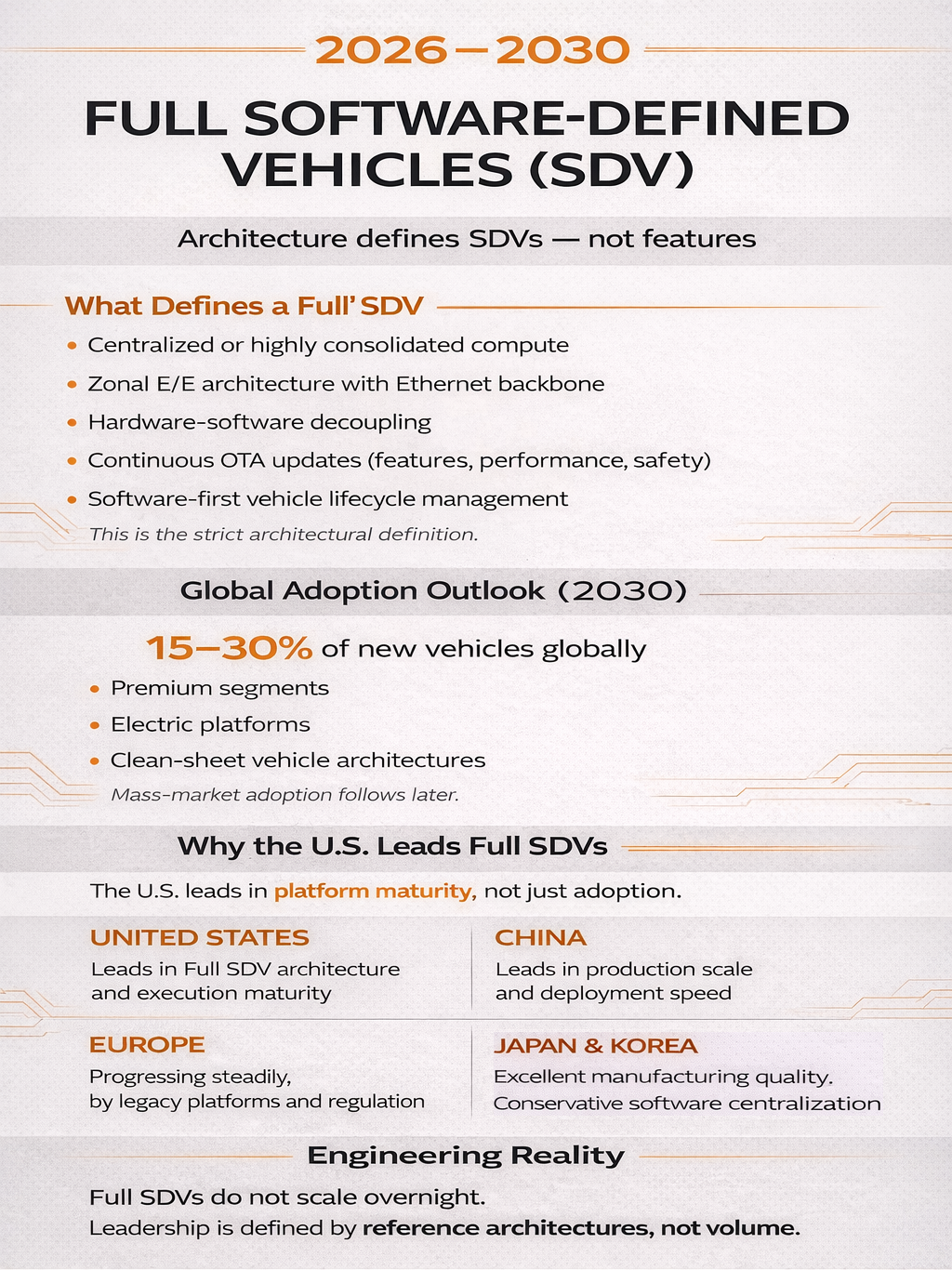
The automotive industry enters 2026 amid stabilization and transformation. Global EV penetration is widely reported to be approaching 25%, driven by battery cost reductions and circular manufacturing initiatives, while U.S. manufacturers assert dominance in Software-Defined Vehicles (SDVs). Centralized architectures, AI integration, and over-the-air (OTA) updates enable vehicles to evolve post-production, reducing hardware complexity and unlocking new revenue streams through subscriptions and features.
U.S. sales settle around 16 million units, with elevated transaction prices near $50,000 fostering a bifurcated market: premium SUVs dominate higher-income segments, while hybrids gain traction as practical alternatives amid fluctuating incentives. CES 2026 highlights agentic AI, zonal controllers, and V2X connectivity, underscoring America’s edge in scalable SDV platforms.
This analysis reflects the systems-level architectural evaluations OCMEE Design performs for clients navigating software-defined vehicle transitions, from platform strategy to execution trade-offs. The following examples reference publicly available product announcements and industry reporting, used here to illustrate broader architectural trends.
U.S. Leadership in SDV Architecture
American companies pioneer SDV deployment through custom silicon, open-source collaboration, and AI-optimized design cycles that can significantly reduce development cycles, according to industry benchmarks. Events like the SDV & AV Technology Summit and MotorTrend Innovator Awards at CES showcase advancements in cybersecurity, real-time processing, and sustainable sourcing. While China leads in volume and Europe emphasizes regulation, U.S. innovators prioritize flexible ecosystems that monetize data and personalization, positioning SDVs as lifelong platforms rather than static products.
Key U.S. Players Advancing the Frontier
Tesla initiates Cybercab Robotaxi production in April 2026 at Gigafactory Texas. This steering-wheel-free autonomous vehicle targets ride-hailing disruption with advanced FSD and Unreal Engine interfaces. Complementing it, refreshed Model Y variants and an affordable Model 2 expand accessibility, while energy storage scales to support grid integration.

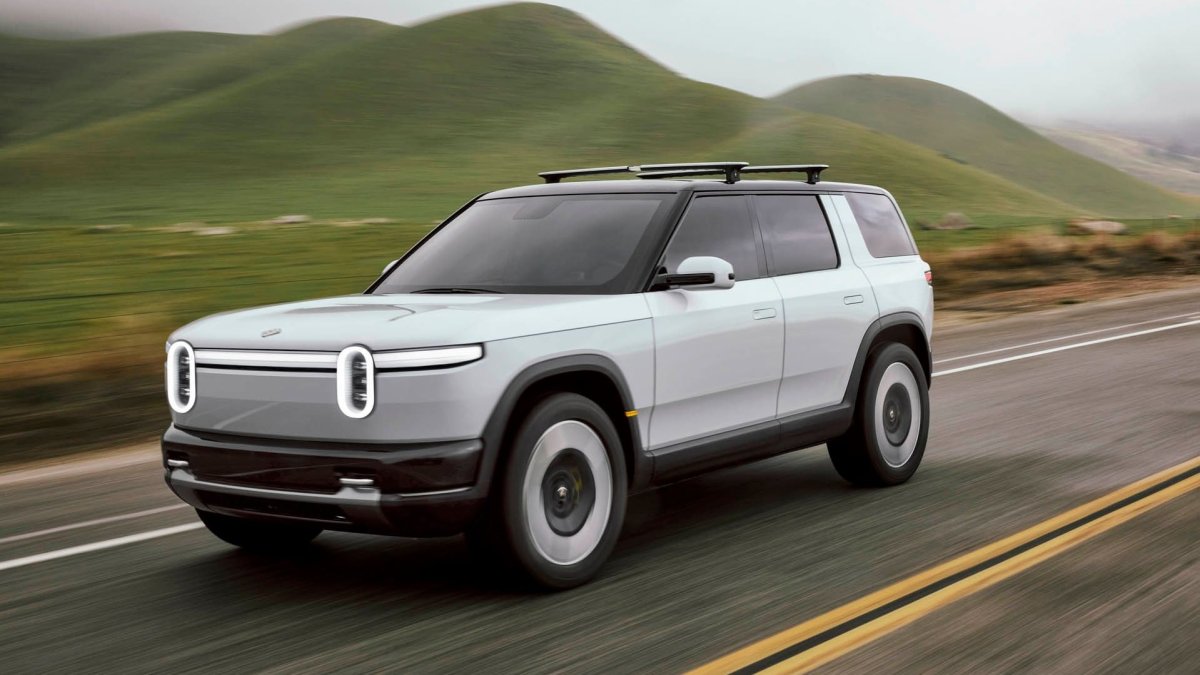
Rivian launches the R2 SUV in early 2026, initially with Gen 2 autonomy hardware. Late-year updates introduce custom Rivian Autonomy Processor, Gen 3 compute, and LiDAR for Level 3 conditional hands-off driving. Autonomy+ subscription delivers universal hands-free capability, positioning Rivian as a contender in AI-driven experiences.
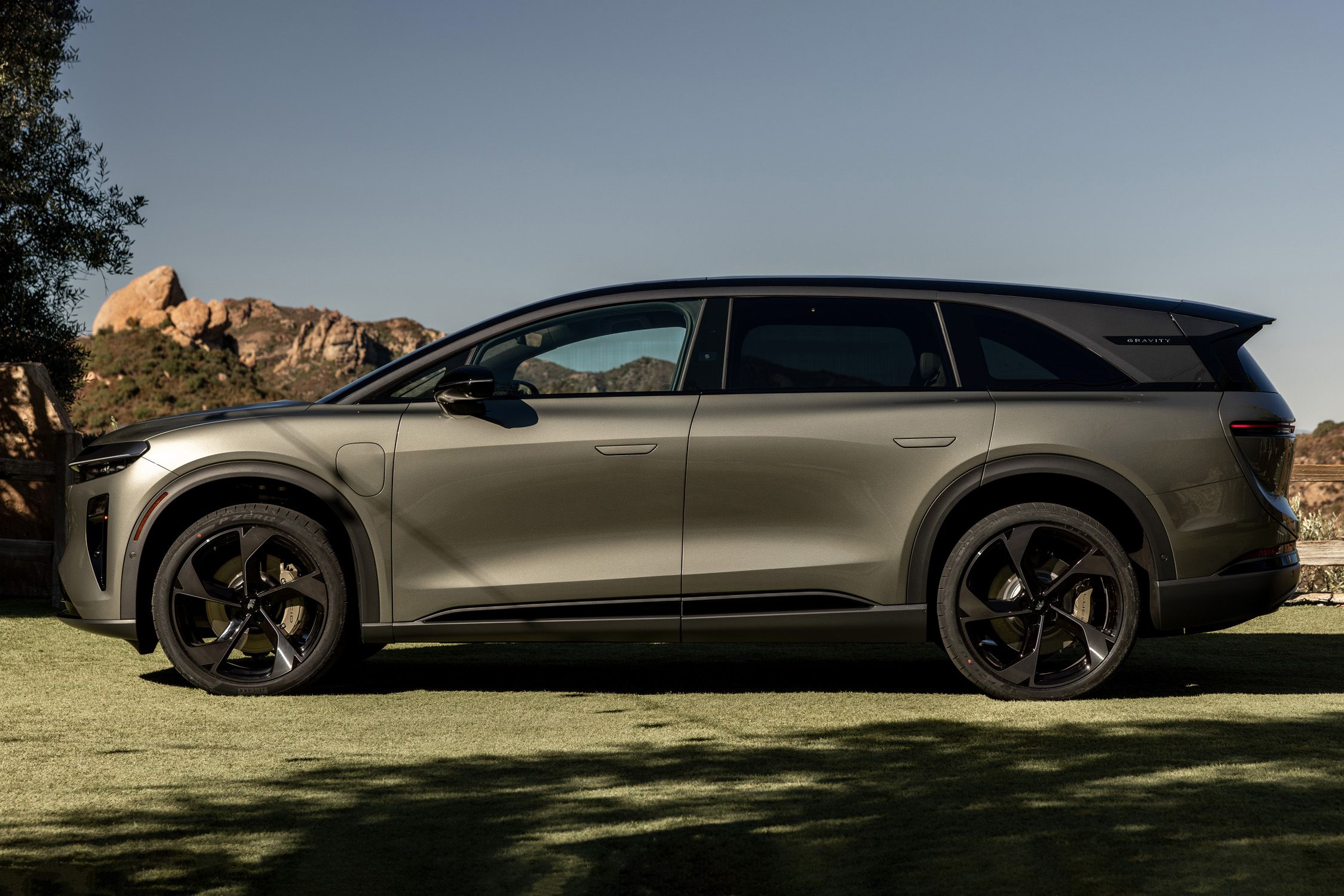
Lucid expands Gravity SUV availability in 2026 with a more accessible Touring variant and rear-wheel-drive option. EPA estimates exceed 450 miles in select configurations, bolstered by air suspension and Supercharger compatibility, reinforcing efficiency leadership in luxury electrification.
Scout Motors commences preproduction in 2026 for Traveler SUV and Terra pickup, targeting 2027 deliveries. Body-on-frame construction, solid axles, and locking differentials preserve off-road heritage, blended with modern EV/EREV powertrains.

Ford pivots toward hybrids and extended-range EVs, streamlining pure-EV focus while advancing OTA powertrain updates and AI efficiency tools.
GM integrates Cruise technology into personal vehicles, enhancing Super Cruise toward broader hands-free operation on Ultium-platform models.
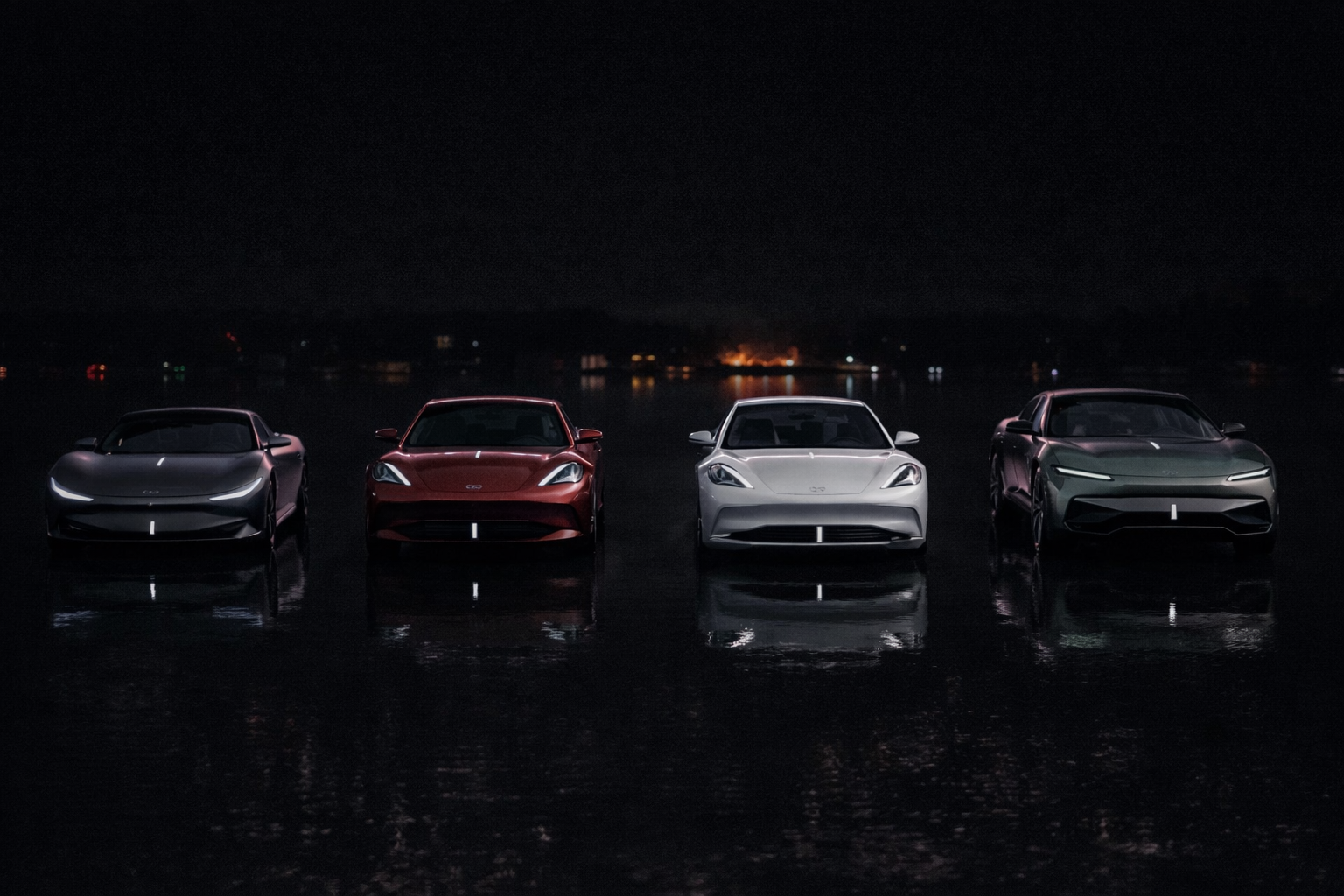
Karma Automotive asserts EREV expertise with four models: Invictus (Q2 2025), Gyesera sedan (Q2 2026), Amaris coupe, Kaveya supercar and Ivara GT-UV. Collaboration with Intel and Aptiv yields progressive SDVA integration, enabling OTA enhancements and AI-optimized efficiency in ultra-luxury segments.
 karmaautomotive.com
2026 marks SDV maturation: reduced ECU counts, zonal controllers, and on-device AI minimize latency while maximizing upgradability. U.S. firms’ investments in custom compute and open ecosystems provide a competitive moat, balancing electrification pragmatism with software-driven differentiation.
Which U.S. innovator’s SDV strategy impresses you most? Share your insights below. We welcome thoughtful discussion on engineering implications.
Ocmee Design Engineering Insights – Advancing Tomorrow’s Mobility Today. These architectural shifts are already shaping engineering decision-making today, particularly for teams balancing hardware legacy with software-first futures.
1 Comment. Leave new
[…] Read next: 2026: Why the U.S. Leads Software-Defined Vehicle Architecture […]