
The Evolution of Vehicle Electrical and Electronic Architecture (1950–2030)
The Evolution of Vehicle Electrical and Electronic Architecture (1950–2030)
January 2, 2026
The evolution of vehicle electrical and electronic architecture reflects a shift from mechanically driven design to software-defined platforms, where early architectural decisions determine system complexity, cost, and future flexibility.
This article outlines the key transitions from legacy wiring to modern zonal architectures and their implications for OEMs and suppliers.
Think about a classic car. A 1957 Chevy Bel Air.
Not only a beauty on the outside, but a paragon of simplicity on the inside, at least when it comes to its electrical system. Very, very simple. But as vehicles have evolved, so has the electrical/electronic (E/E) architecture that powers them.
Fast-forward to today, where modern vehicles process terabytes of data in real-time, enable over-the-air updates, and pave the way for full autonomy. The shift from mechanical dominance to software-defined vehicles (SDVs) has been dramatic, and it’s accelerating faster than anyone predicted.
Consumer demand for safety, connectivity, electrification, and advanced features continues to surge. This drives explosive growth in computing power, data transfer, and software complexity. Traditional architectures can’t keep up. The future? Zonal designs, centralized compute, and vehicles that evolve like smartphones.
Vehicle electrical architecture did not become complex by accident.
In the 1950s, a car’s wiring was simple enough to trace by hand.
No ECUs.
No networks.
No software.
Then reality stepped in.
Regulations.
Safety.
Comfort.
Electrification.
Connectivity.
Over a few decades, vehicles evolved from mechanical systems with wires…
to distributed electronic systems…
to rolling data centers.
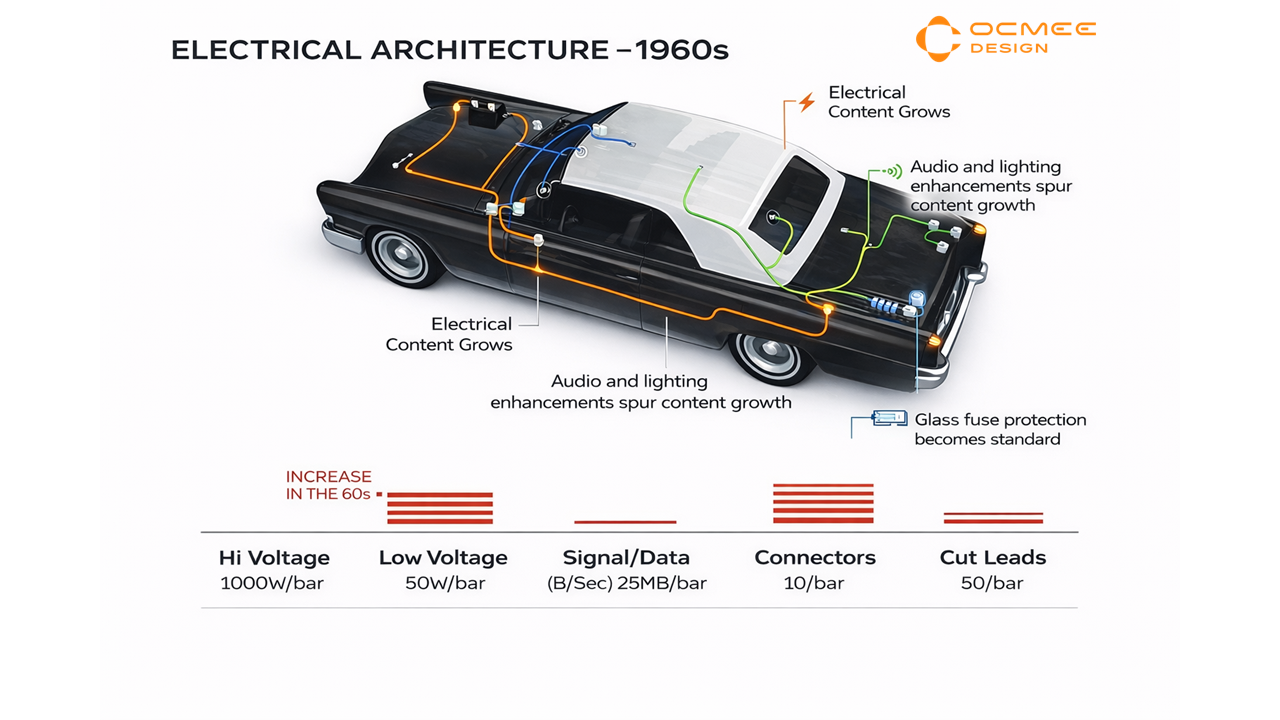
1950s–1960s: Simplicity and Early Growth
Minimal electrical content dominated early decades.
- 12-volt systems became standard.
- Basic connections (ring terminals, woven cloth coverings).
- Audio and lighting enhancements added the first real growth.
No electronics to speak of, just reliable, mechanical reliability.
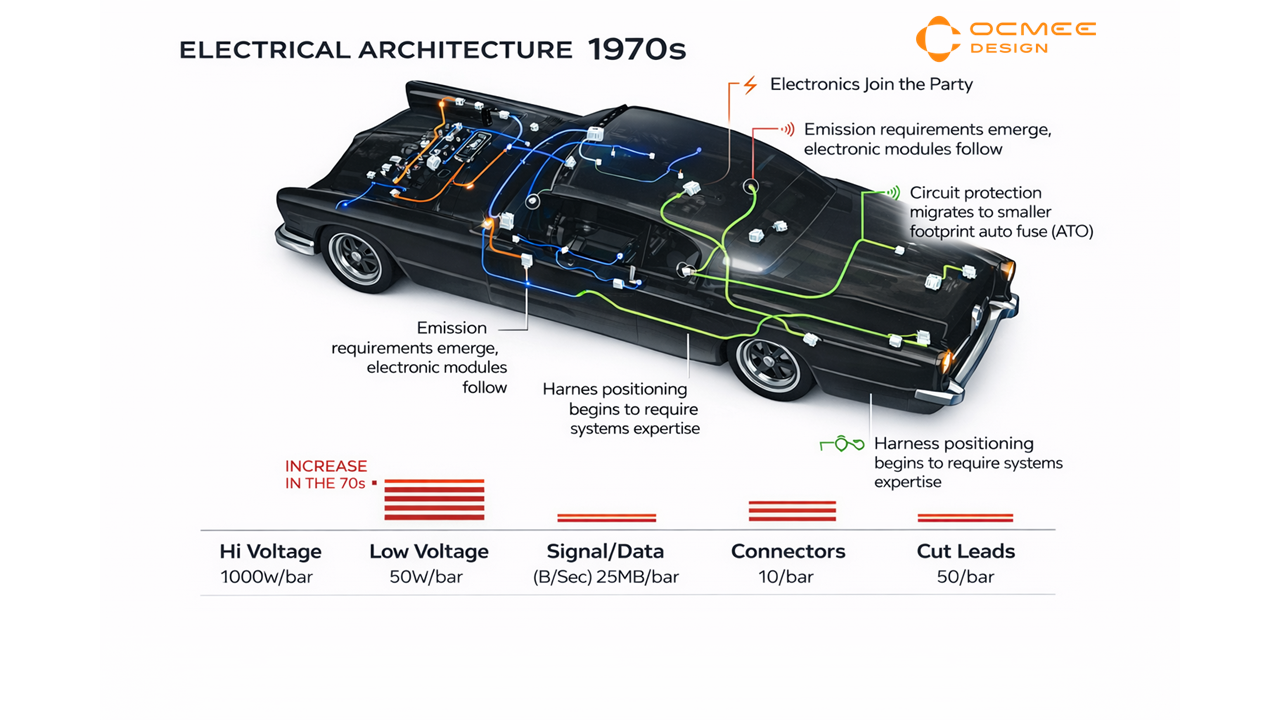
1970s–1980s: Electronics Enter the Scene
Emissions regulations forced the introduction of electronic modules, the birth of the ECU era.
- Circuit protection shrank (ATO fuses).
- Sealed connections emerged as best practice.
- Harness complexity required new expertise.
Vehicles began transitioning from purely mechanical to electro-mechanical systems.
1990s–2000s: Acceleration and Complexity Explosion
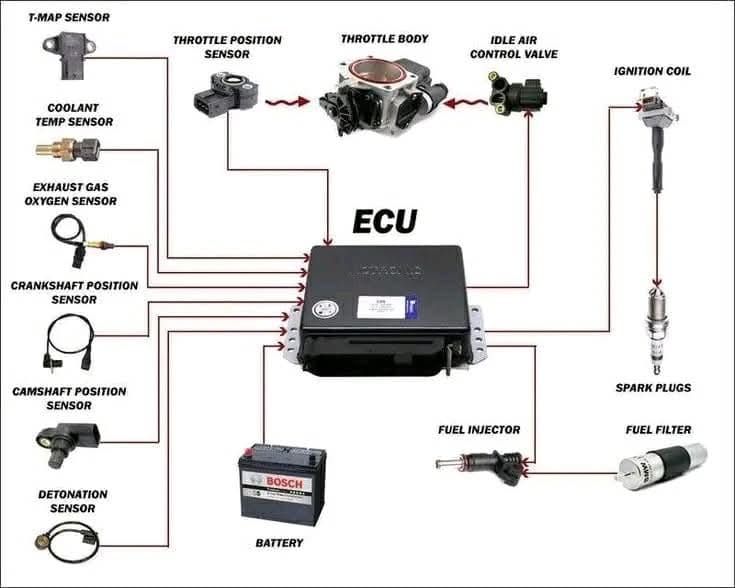
Architecture expertise became critical as ECUs proliferated (50–100 per vehicle).
- Electrical centers optimized packaging.
- Data protocols (CAN bus) enabled communication.
- “Optional” features like ABS and infotainment became standard.
Wiring harnesses grew heavier and more costly.
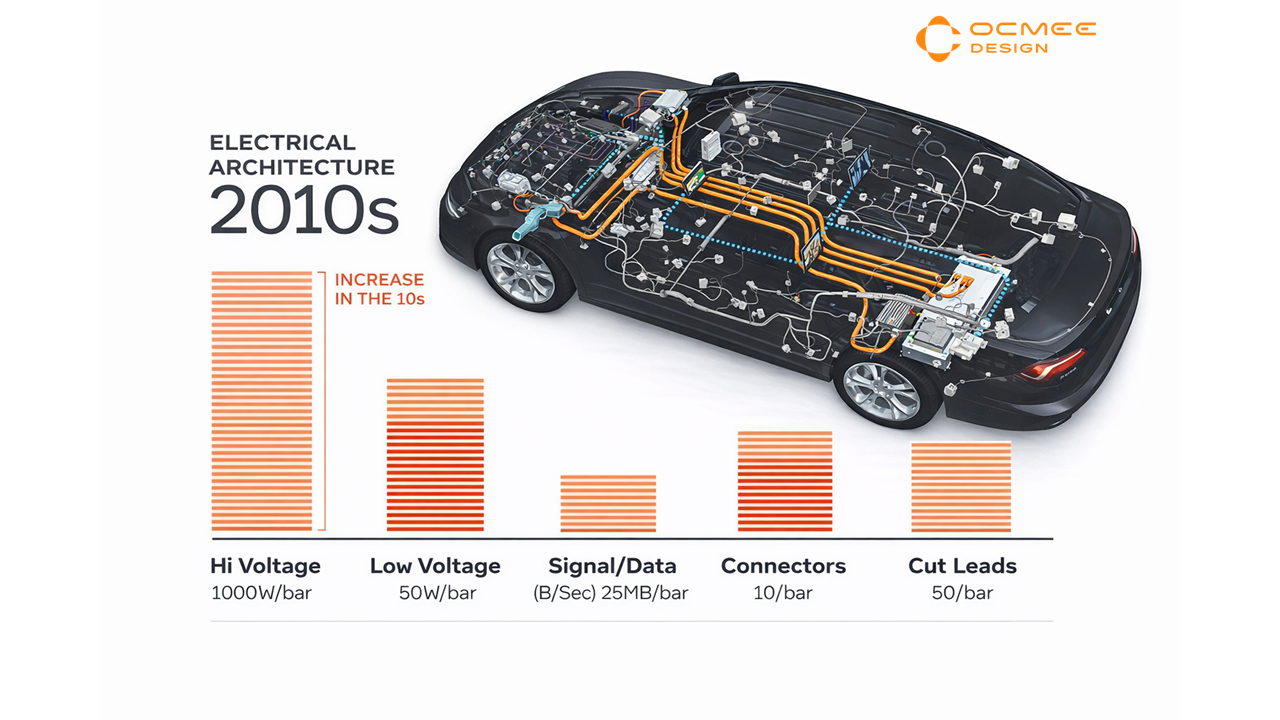
2010s: Connectivity and High-Power Demands
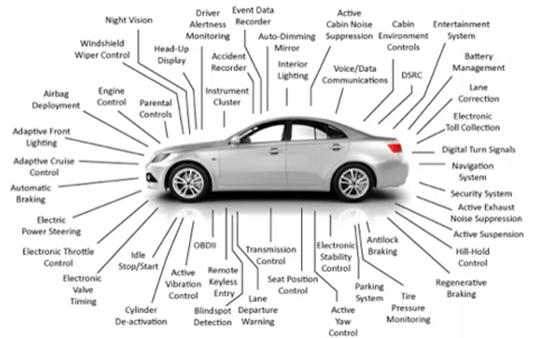
Hybrid/electric powertrains, ADAS, and infotainment added layers.
- High-voltage systems for efficiency.
- Cybersecurity emerged as a concern.
- Domain-centralized architectures grouped functions (powertrain, chassis, body).
Still, vehicles relied on distributed ECUs connected via mixed protocols.
2020s: The Zonal Revolution (Where We Are Now in 2026)
Many industry predictions from have come true, and faster.
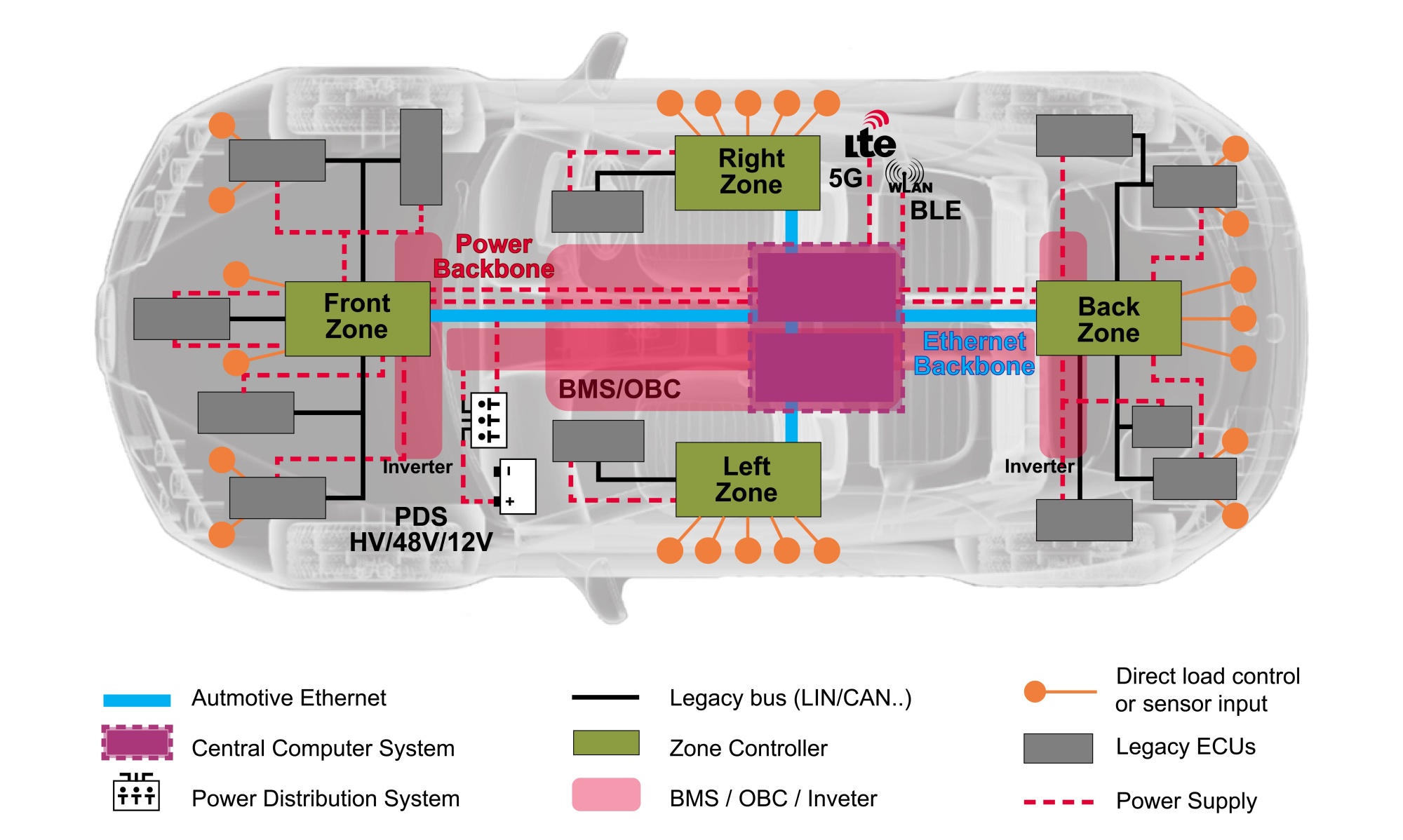
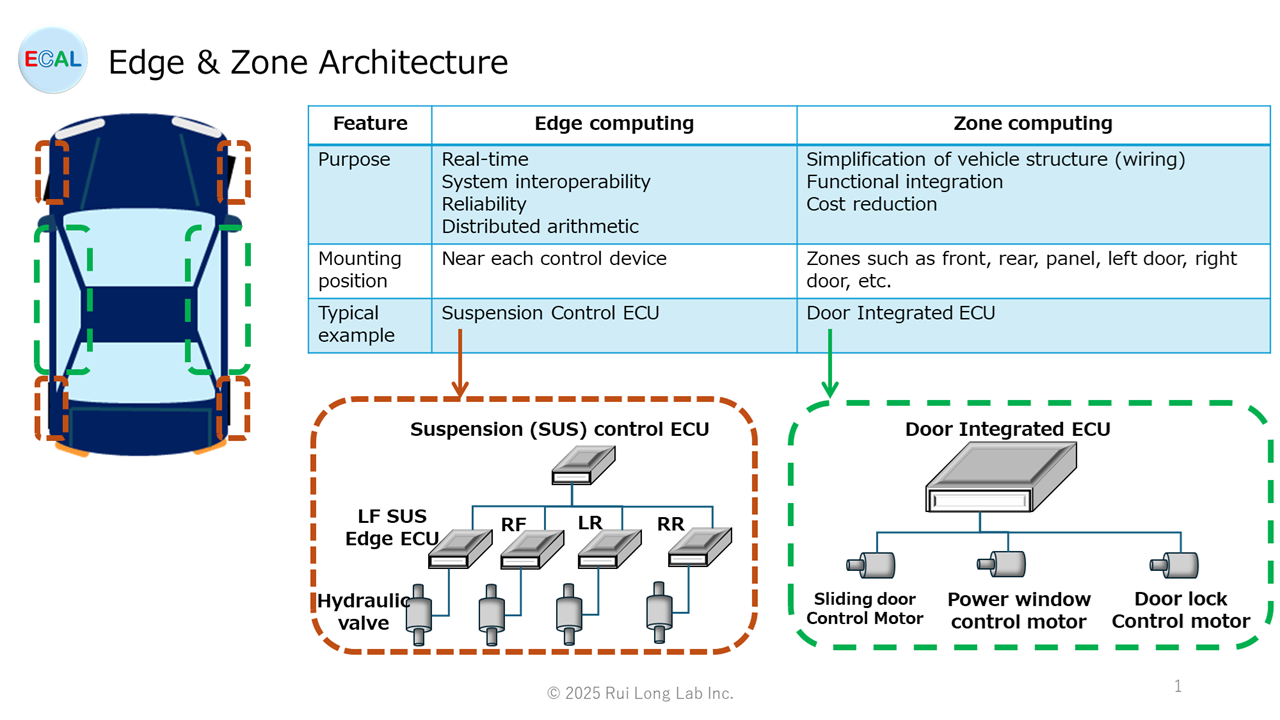
The industry has shifted decisively to zonal architectures, where controllers are organized by physical zones (front, rear, left/right) rather than domains. This connects to a few high-performance central computers via multi-gigabit Ethernet backbones.
The following examples reference publicly available industry announcements and reporting, used here to illustrate broader architectural trends rather than proprietary programs.
Key developments as of 2026:
- Reduced complexity: ECU counts drop 50–70%, wiring harnesses shrink 30–80% (e.g., Rivian removed miles of wire; Tesla pioneered this).
- Production examples, VW-Rivian joint venture tests zonal SDV platforms (winter 2026 validation, production 2027+); GM adopts zonal for 2028 models; Chinese OEMs lead volume adoption.
- Market growth, Zonal/SDV penetration accelerates; estimates show 15–50% of new vehicles with advanced zonal by late 2020s, heading to 40–80% by 2034.
- Enablers, Over-the-air (OTA) updates now standard for features/performance; automotive Ethernet dominates.
This evolution supports true software-defined vehicles (SDVs), analysts broadly expect SDV-related markets to expand significantly this decade, driven by software centralization, OTA capability, and lifecycle feature monetization.

2030s and Beyond: Full SDV Dominance
The vision of “advanced integration” is here earlier than expected.
- Few central “supercomputers” (Nvidia, Qualcomm) handle all functions.
- Hardware/software decoupled for lifelong updates.
- AI-driven personalization, Level 4+ autonomy standard in many models.
- New revenue: Subscriptions, feature-on-demand.
Challenges remain, cybersecurity, talent shortages, subscription acceptance, but the benefits (lighter, cheaper, updatable vehicles) are undeniable.

Electrical architecture is no longer a background system. It is a primary driver of cost, capability, validation effort, and long-term platform flexibility in modern vehicles. Decisions made early in E/E architecture definition now directly influence wiring mass, ECU count, software scalability, supplier integration, and the feasibility of future feature expansion.
This is where structured architectural analysis becomes critical. At OCMEE Design, we support OEMs and suppliers by evaluating electrical and electronic architectures early, translating system-level intent into manufacturable, serviceable designs, and identifying complexity, cost, and integration risks before they reach production. As vehicles continue to evolve toward software-defined platforms, disciplined E/E architecture decisions will increasingly separate scalable programs from fragile ones.
The lesson from 1950 to 2030 is clear: vehicles are no longer defined only by their mechanical systems. They are defined by how intelligently power, data, and software are structured from day one.
Read next: 2026: Why the U.S. Leads Software-Defined Vehicle Architecture
The pictures tell the story: From miles of heavy copper wiring to streamlined zonal designs with Ethernet spines.





2 Comments. Leave new
https://ocmeed.com/software-defined-vehicles-us-leadership-2026/
[…] Read Next: The Evolution of Vehicle Electrical and Electronic Architecture (1950–2030) […]